
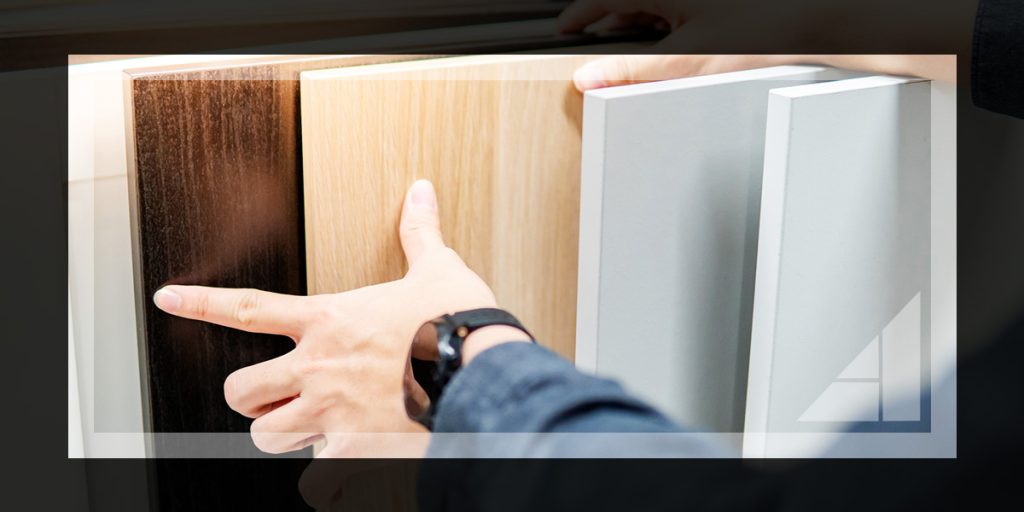
Cabinet door materials play a major role in how a kitchen, bathroom, built-in, or custom cabinetry project looks, performs, and fits within budget. For contractors, remodelers, designers, cabinet manufacturers, and cabinet shops, choosing the right material can help balance durability, appearance, maintenance, lead time, and customer expectations.
This cabinet door materials guide explains the most common kitchen cabinet door materials, how they compare, and when each option may be the best fit for a project.
Exploring Kitchen Cabinet Door Styles and Materials
Before selecting a cabinet door material, it helps to understand how door style, construction, finish direction, and material work together. A painted recessed panel door, a stained raised panel door, a modern slab door, and a thermally textured surface door can all serve different design goals, budgets, and performance needs.
Conestoga Wood Specialties offers cabinet doors and drawer fronts across a wide range of styles, materials, species, profiles, and finishes, helping trade professionals source the right option for each project.
Popular Cabinet Door Styles
Cabinet door style is one of the first decisions that shapes the look of a project. The right style depends on the customer’s design preferences, the room’s architecture, and the desired balance between timeless, modern, traditional, or custom detailing.
- Shaker: Shaker cabinet doors are known for their clean frame and recessed center panel. They remain one of the most popular kitchen cabinet door styles because they work well across transitional, farmhouse, traditional, and modern designs.
- Craftsman: Craftsman cabinet doors are similar to Shaker doors but often have a more substantial, handcrafted, or rustic feel. They can be a strong fit for warm, natural, and character-driven kitchen designs.
- Recessed: Recessed panel cabinet doors have a center panel that sits lower than the surrounding frame. They are versatile and can work well in farmhouse, transitional, contemporary, and traditional spaces depending on the profile, material, and finish.
- Raised panel: Raised panel cabinet doors add depth and decorative detail. They are often used in traditional, classic, or more formal kitchen designs and can be especially effective with stained wood finishes that highlight the door’s profile and grain.
- Slab: Slab cabinet doors have a flat, streamlined front. They are commonly used in modern, contemporary, and minimalist kitchens where clean lines and simple surfaces are the priority.
- Beaded panel: Beaded panel cabinet doors include decorative grooves that add texture and detail. They can work well in farmhouse, coastal, cottage, and traditional designs.
- Glass doors: Glass cabinet doors help brighten a space and create display areas for dinnerware, décor, or specialty storage. They are often used as accent doors alongside solid cabinet door styles.
While many styles continue to perform well, Shaker cabinet doors remain a leading choice because of their versatility. Slab cabinet doors also continue to gain traction in modern and contemporary projects.
What are the Best Cabinet Door Materials?
The best cabinet door material depends on the project’s budget, finish direction, durability needs, maintenance expectations, and design goals. Some materials are best for stained finishes, while others are especially well suited for painted cabinet doors, high-humidity spaces, or cost-conscious projects.
- Solid Wood: Solid wood cabinet doors can be made from species such as maple, cherry, hickory, alder, birch, red oak, walnut, and white oak. Solid wood is valued for its natural grain, strength, and premium appearance. It’s often a strong choice for stained cabinet doors because the finish can highlight the character and variation of the species.
- Plywood Panel: Plywood panel cabinet doors can offer a balance of durability, stability, and cost control. They are often more affordable than solid wood while still providing reliable performance for many cabinetry applications. Plywood can be useful when a project requires a wood-based material with good structural properties and a more budget-conscious price point.
- Medium-Density Fiberboard (MDF): Medium density fiberboard, commonly called MDF, is an engineered wood material made from compressed wood fibers, resin, and heat. MDF cabinet doors provide a smooth, grain-free surface that works especially well for painted cabinet projects. MDF is often selected for painted kitchens, bathroom vanities, laundry rooms, built-ins, and other applications where a clean, consistent finish is important.
- Hybrid: Hybrid cabinet doors combine the look or performance benefits of different materials. These options can help provide the appearance of wood while supporting the stability, paintability, or cost advantages of engineered materials. Hybrid cabinet doors can be a strong fit when the project requires a specific design look but also needs practical benefits around budget, consistency, or finish performance.
- Thermally Textured Surfaces (TTS): Thermally textured surface, or TTS, cabinet doors are designed to replicate the look of wood while offering strong consistency, durability, and resistance to warping. TTS cabinet doors can be a useful option in projects where humidity, durability, and low maintenance are important considerations.
- Decorative Laminate Veneer: Decorative laminate veneer, or DLV, cabinet doors offer the look of wood or other decorative surfaces with strong stability and practical performance. DLV cabinet doors can be a versatile option for projects where durability, consistency, and cost control matter.
- High Gloss and Super Matte: High gloss and super matte cabinet doors are alternative material options that support modern and contemporary design trends. High gloss doors create a reflective, polished look, while super matte options create a softer, low-sheen appearance.
How to Choose the Right Cabinet Door Material
Choosing the right cabinet door material starts with the project’s design goal, budget, finish direction, and performance requirements.
If the customer wants a stained finish that highlights natural grain, solid wood is often the strongest option. If the project calls for a painted finish, MDF or paint-grade options may provide a smoother and more consistent result. If durability, consistency, and lower maintenance are priorities, TTS or DLV may be worth considering. If the project needs a balance of appearance and cost control, plywood, hybrid, or engineered options may be the right fit.
The right material should support both the final design and the way the space will be used over time.
Cabinet Door Maintenance by Material
Maintenance requirements vary by cabinet door material, finish, and environment. Understanding these differences can help contractors, remodelers, and designers guide clients toward options that match their lifestyle and expectations.
Solid wood cabinet doors may require more careful maintenance than some alternative materials. They should be cleaned with nonabrasive products appropriate for finished wood surfaces. Scratches, dents, or finish wear may require touch-up tools or professional repair depending on the severity.
MDF cabinet doors can perform well when properly sealed and finished, but exposed MDF can be more vulnerable to moisture. Painted MDF doors should be wiped dry after cleaning and protected from prolonged water exposure.
Plywood, wood veneer, decorative laminate veneer, and thermally textured surface doors are generally easy to maintain. Many can be cleaned with a soft cloth and appropriate mild cleaning solution, depending on the finish and manufacturer recommendations.
Cabinet Door Manufacturing and Quality
High-quality cabinet doors depend on the right combination of material selection, manufacturing precision, technology, and skilled craftsmanship. Reliable cabinet door manufacturers use consistent processes, well-maintained equipment, and experienced craftspeople to produce doors that meet project specifications.
At Conestoga Wood Specialties, cabinet doors and drawer fronts are manufactured with attention to material quality, construction detail, and consistency. This helps contractors, remodelers, designers, cabinet manufacturers, and cabinet shops source products that are built for professional use.
Comparing Cabinet Door Quality
The highest-quality cabinet door material depends on the needs of the project. Solid wood is often considered a premium option because of its natural beauty, strength, and long-term value. However, it can come with a higher price point, more maintenance, and greater sensitivity to humidity changes.
MDF can be an excellent choice for painted cabinet doors because it provides a smooth, consistent surface. TTS and DLV can help replicate the appearance of wood while offering stability and lower maintenance. Plywood and hybrid materials can provide a practical middle ground for projects that need durability and cost control.
Rather than choosing one material as the best for every situation, the goal is to match the cabinet door material to the project’s design, budget, environment, and performance needs.
How Cabinet Door Style and Material Shape Kitchen Design
Cabinet doors define much of a kitchen’s visual character. The door style, material, finish, profile, and hardware all work together to influence whether a space feels modern, traditional, farmhouse, transitional, warm, minimal, or highly customized.
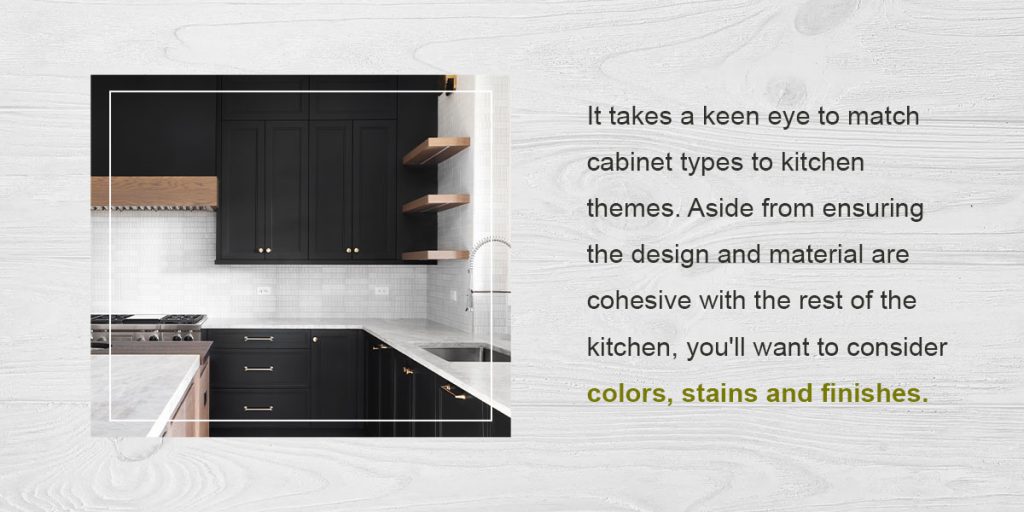
- Contemporary and modern kitchens: Contemporary and modern kitchens often use slab doors, recessed panel doors, super matte finishes, high gloss finishes, or clean painted cabinet doors. These materials and styles help create simple lines and a streamlined appearance.
- Farmhouse: Farmhouse kitchens often feature Shaker, recessed panel, glass, or beaded panel cabinet doors. Painted finishes, warm wood tones, and classic profiles can help create a comfortable and timeless look.
- Traditional: Traditional kitchens often use raised panel doors, recessed panel doors, framing beads, applied moulding, and stained wood finishes. Solid wood cabinet doors can be especially effective in traditional designs where natural grain and depth are important.
- Transitional: Transitional kitchens blend traditional and contemporary design elements. Shaker doors, recessed panel doors, painted finishes, and simple profiles are often strong choices because they provide flexibility without feeling too modern or too ornate.
Using Cabinet Door Materials for Unique Kitchen Designs
Unique kitchen designs often include bold colors, mixed finishes, specialty hardware, geometric tile, statement lighting, or contrasting islands. Cabinet door materials can support these designs through paint, stain, texture, profile, and finish selection.
For example, a designer may use painted MDF doors for a clean perimeter cabinet look, stained solid wood doors for an island, glass doors for accent storage, or TTS cabinet doors for a modern wood-look surface. Mixing materials and finishes can help create a custom design while still supporting budget and performance goals.
Incorporating Client Preferences in Cabinet Door Selection
Most clients come into a cabinetry project with preferences around color, material, style, budget, and maintenance. Listening to those preferences is important, but trade professionals also need to guide clients toward choices that are practical for the project.
If a client wants a stained wood look on a strict budget, a wood veneer, DLV, or other alternative material may be worth discussing. If they want a painted finish with a smooth surface, MDF may be a better recommendation than some solid wood options. If they are concerned about humidity, durability, or maintenance, TTS or other stable materials may be a better fit.
Clear communication helps align the final cabinet door selection with the client’s goals, the project budget, and the long-term performance of the space.
Environmental Considerations for Cabinet Door Materials
Sustainability is an important consideration for many cabinet door projects. Conestoga Wood Specialties achieved KCMA Environmental Stewardship Program certification in 2008 and has retained certification every year since.
When you work with Conestoga, you can give clients confidence that their cabinet doors and components come from a manufacturer committed to responsible practices, recycling, and waste reduction.

Work With Conestoga Wood Specialties to Source Custom Cabinet Doors
Conestoga Wood Specialties has manufactured custom cabinet doors, drawer fronts, ready-to-assemble cabinets, and cabinetry components since 1964. Contractors, remodelers, designers, cabinet manufacturers, cabinet shops, and other trade professionals rely on Conestoga for customizable products, dependable service, and a wide range of material and style options.
Whether you are comparing solid wood cabinet doors, MDF cabinet doors, plywood panel doors, hybrid options, thermally textured surfaces, decorative laminate veneer, high gloss, or super matte options, our team can help you choose the right material for your project.
Contact Conestoga to discuss your cabinet door material options, request a quote, or connect with a representative.